


Can we reconnect in an increasingly disconnected world?
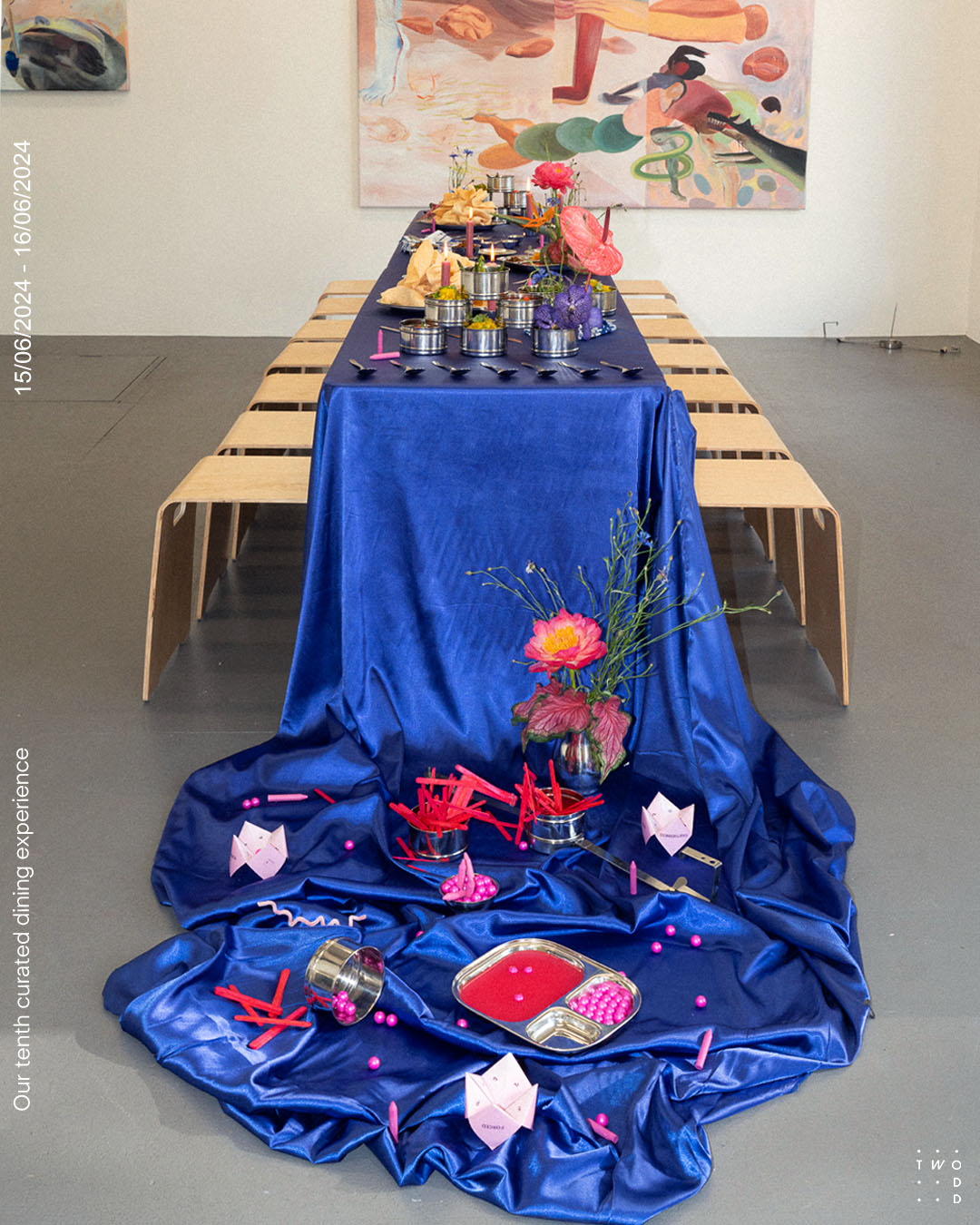
A breakdown of our tenth dining experience titled ‘Forced Togetherness’. The experience examined how modern conveniences impact our sense of community and forming connections through the lens of South Asian culture, with chefs Ruhi Parmar, Aadil Kumar, and food stylist Rezma Rahman at Anahita Sadhighi's Contemporary Gallery.
To stay true to the objective of enhancing visibility for South Asian culture, we partnered with Sepia, who brought their community for the second evening.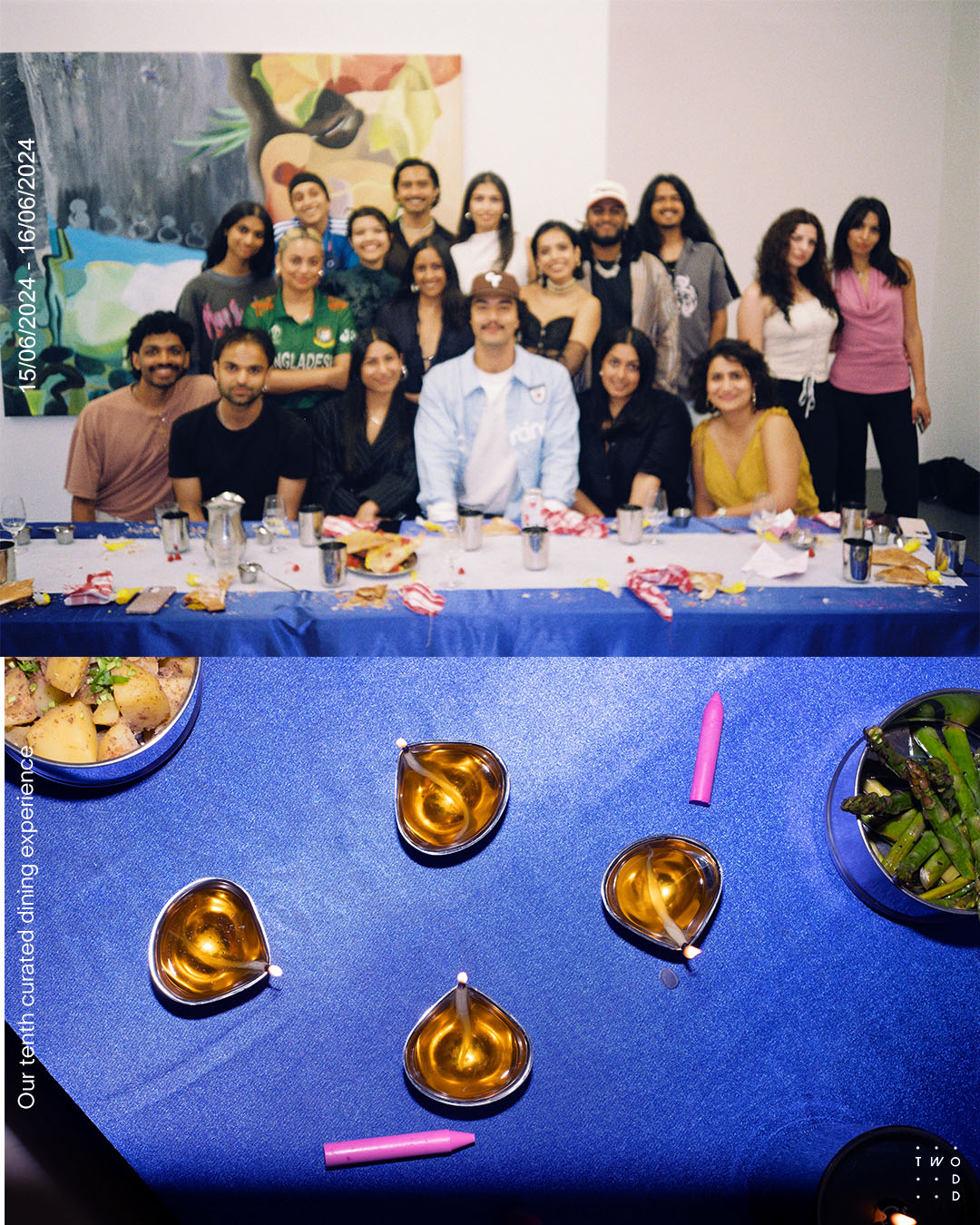
Our dining experiences revolve around the idea of artistically translating a theme in the creative direction of the evening, the dining experience, and the menu for the dinner. The goal of these experiences is always to shed some light on relevant topics in a creative manner by providing a well-rounded and holistic experience as a creative studio and by bringing people together.
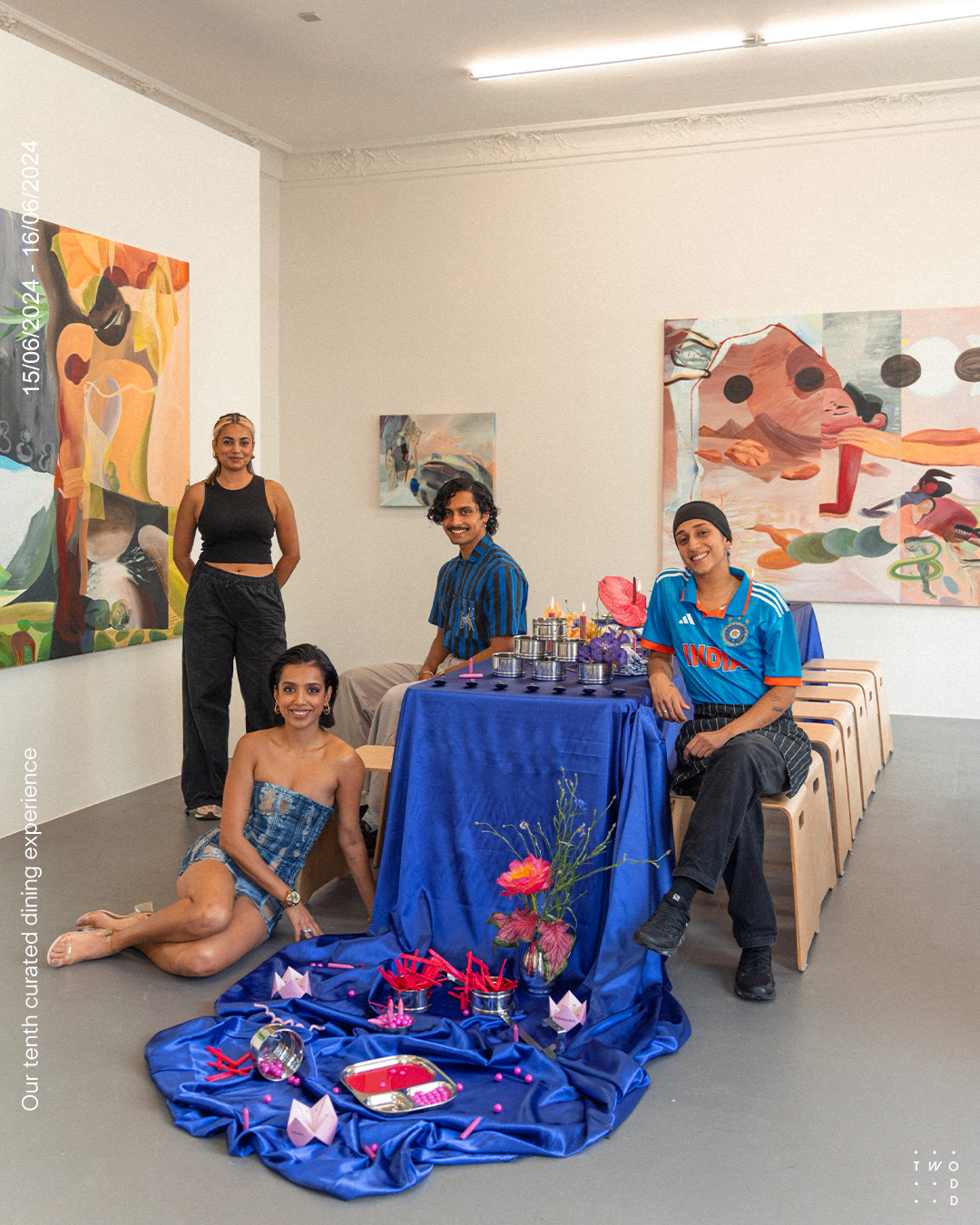
Theme:
Modern technology, while beneficial, often reduces traditional face-to-face interactions. Tasks that once required human contact, like banking or shopping, are now done online, fostering isolation. This digital shift makes life easier but less connected, contributing to loneliness. Particularly after the pandemic, many find it challenging to reconnect socially, emphasizing the need for balancing independence with community involvement.
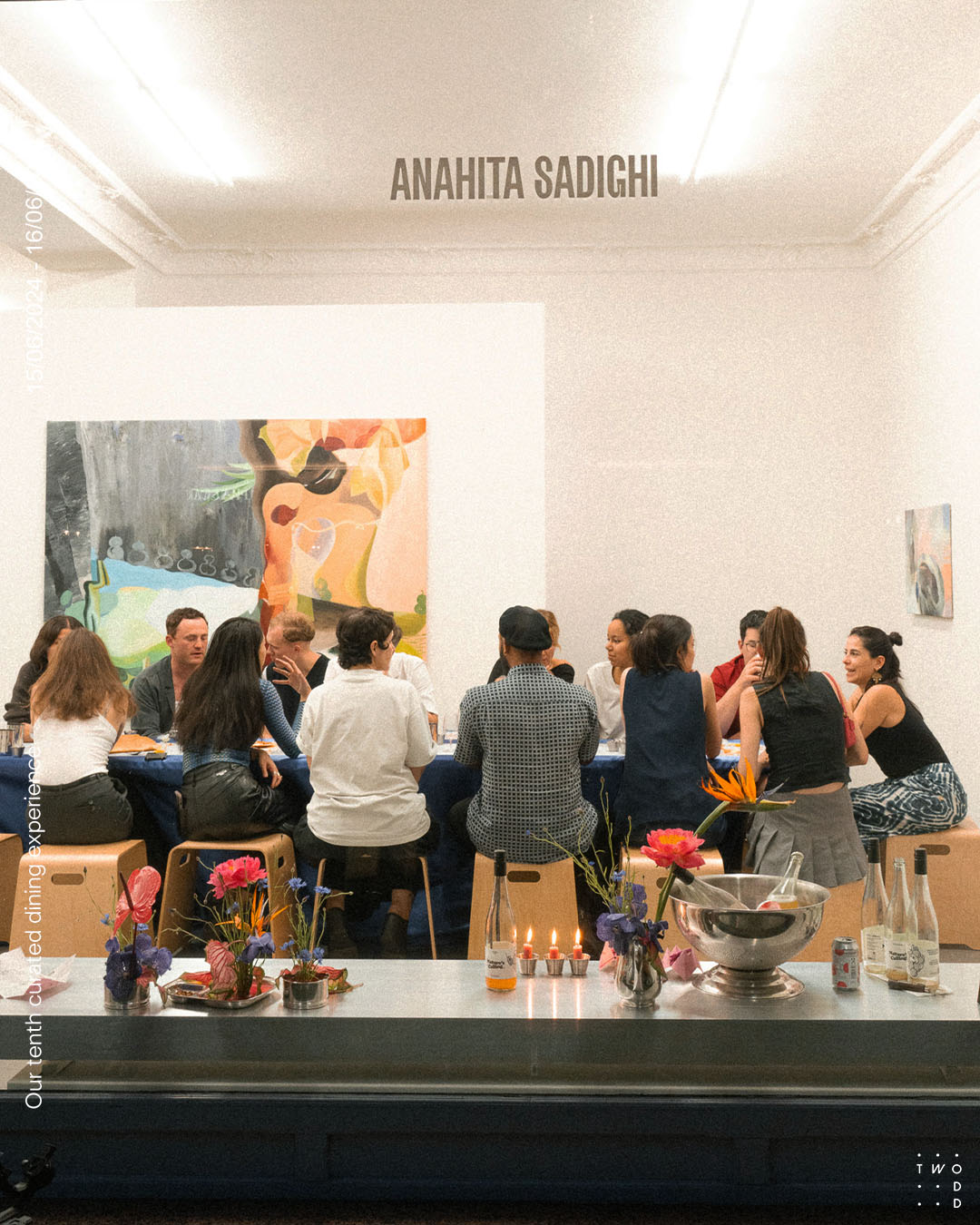
Loneliness is often exacerbated by cultural disconnection, especially among immigrants and diaspora communities. While globalization allows for cultural exchange, it can also make individuals feel detached from their own heritage. Food serves as a powerful bridge to reconnect people with their roots and share cultural heritage, mitigating feelings of isolation.
Western cultures emphasize individualism, leading to solitary lifestyles, in contrast to the collectivism prevalent in Eastern cultures, where communal activities, especially meals, foster social bonds. This difference highlights the loneliness inherent in individualistic societies. Addressing this loneliness involves valuing shared experiences over material possessions, a perspective often overshadowed by capitalist values.
As technology and globalization reshape our lives, they challenge our social connections. This narrative encourages sharing personal stories or songs to foster a sense of community. It reminds us of the importance of being with others, sharing our lives, and finding the right balance between independence and communal living. By emphasizing communal experiences and cultural reconnection, we can counteract the isolating effects of modern technology and individualism.
This experience aimed to create a space for genuine connection. Our team, hailing from South Asia where community and food are central, contrasted with the individualistic Western approach. We strived to strike a balance between individuality and community, bringing that sense of communal belonging to you.
The Experience and the Menu:
There are few things in life that foster connection better than a shared meal at a table. Eating together isn’t just about the food. It’s about the anecdotes you share, the conversations you partake in, and the histories you learn about the flavors you encounter. What brought that variation of potato to the city you live in now? Where did the turmeric in your broth really come from?
For this experience, our menu was designed to take our guests on a journey through our personal backgrounds, traversing the roots of our ancestors, the countries we call ‘a second home’, and the techniques we’ve picked up along the way. The menu consisted of four courses, each representing the theme of collectivism in its own way.

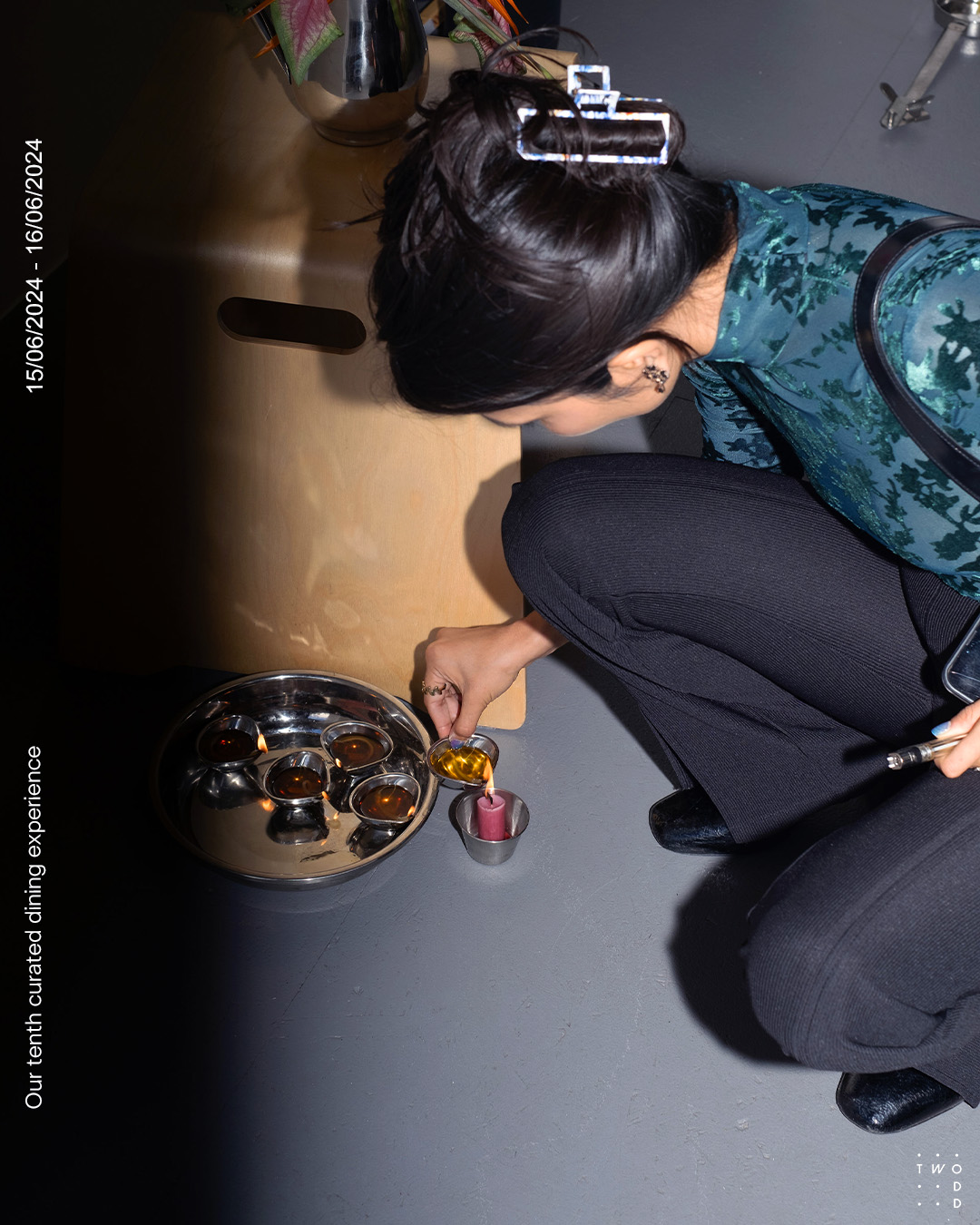
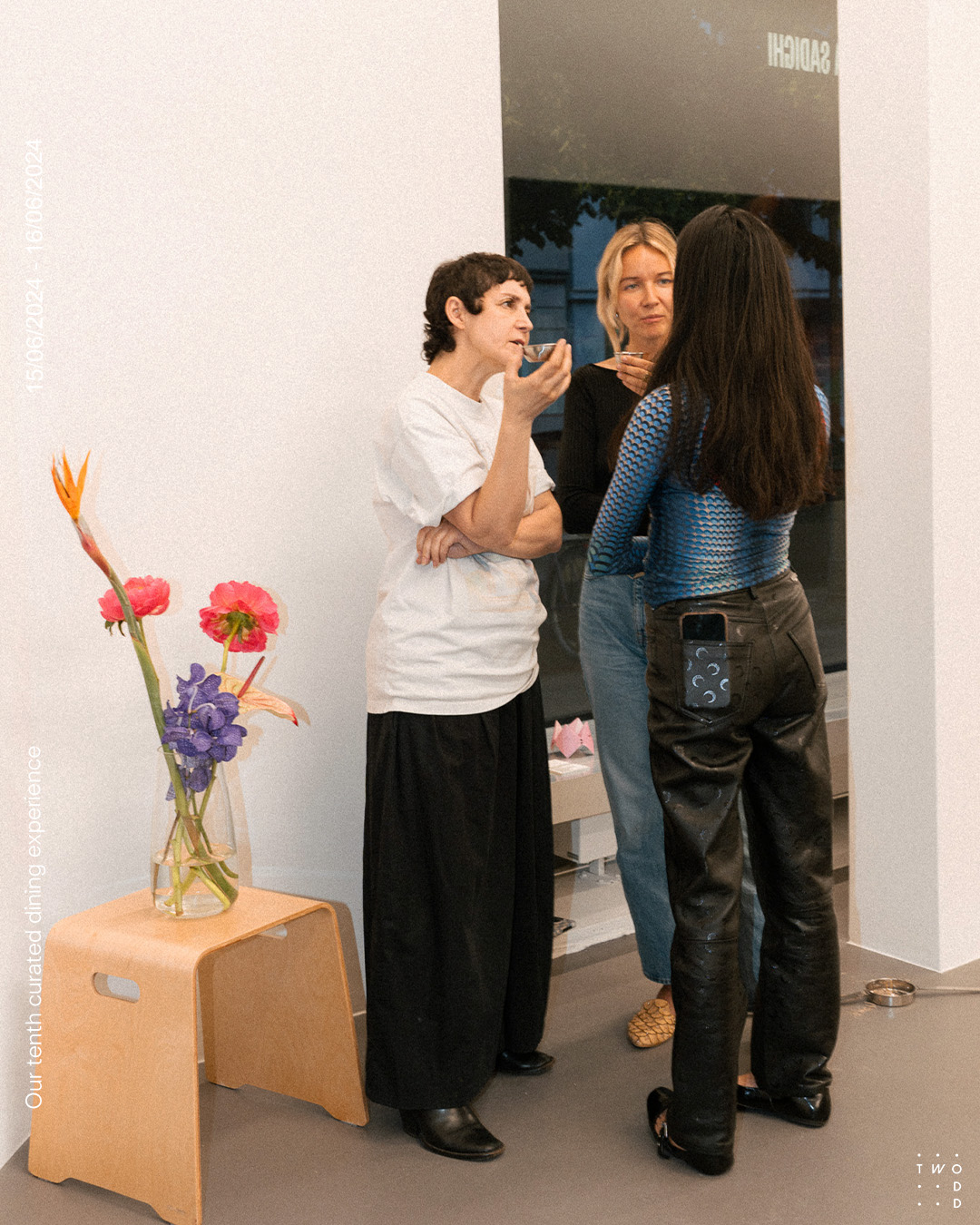
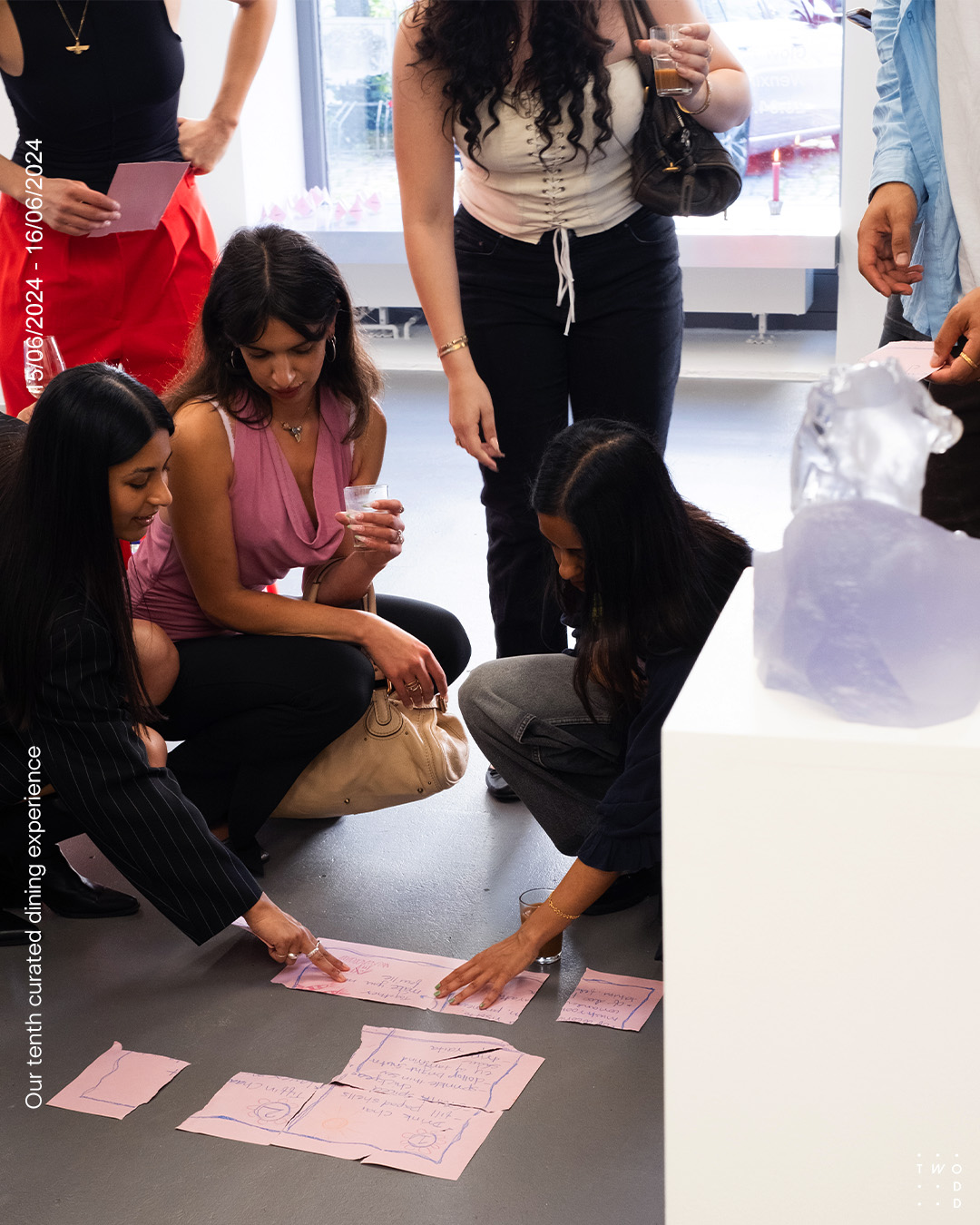
Guests were welcomed into the space with a steaming masala chai—the perfect way to cool down on a warm summer evening and an aromatic way to start the experience. They were also handed a part of the menu and asked to participate in an icebreaker activity—patching the menu together. The purpose of this activity was to have them collectively determine what the menu would entail for the rest of the evening, encouraging collaboration and a shared goal from the start.
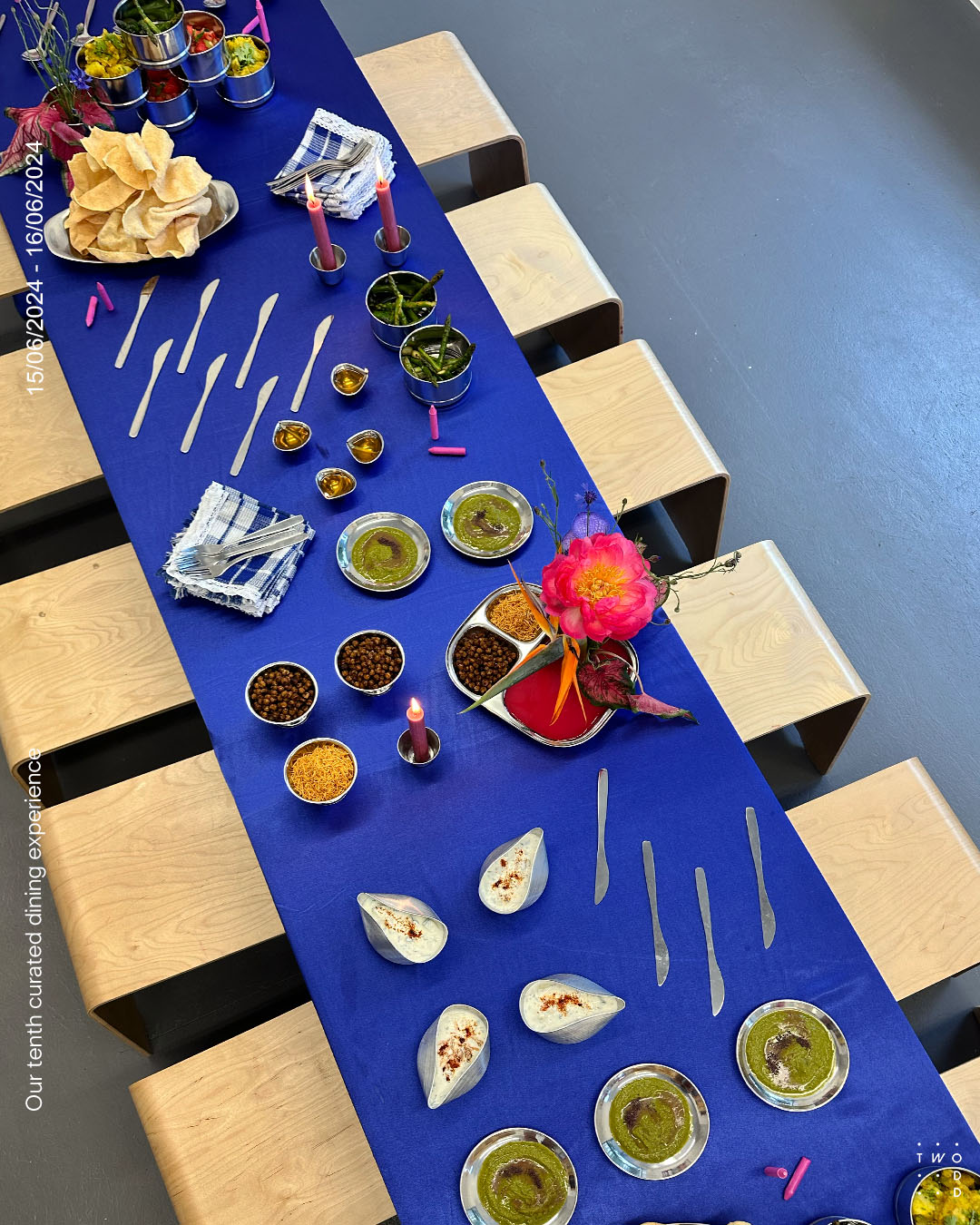
On the table was an edible installation that consisted of poppadum shells, spiced roasted chickpeas, sev, coconut, and green chili chutney with a tamarind swirl and cool cucumber raita. Riffing off the structure of a traditional chaat, these elements were the first layer for our upcoming course.
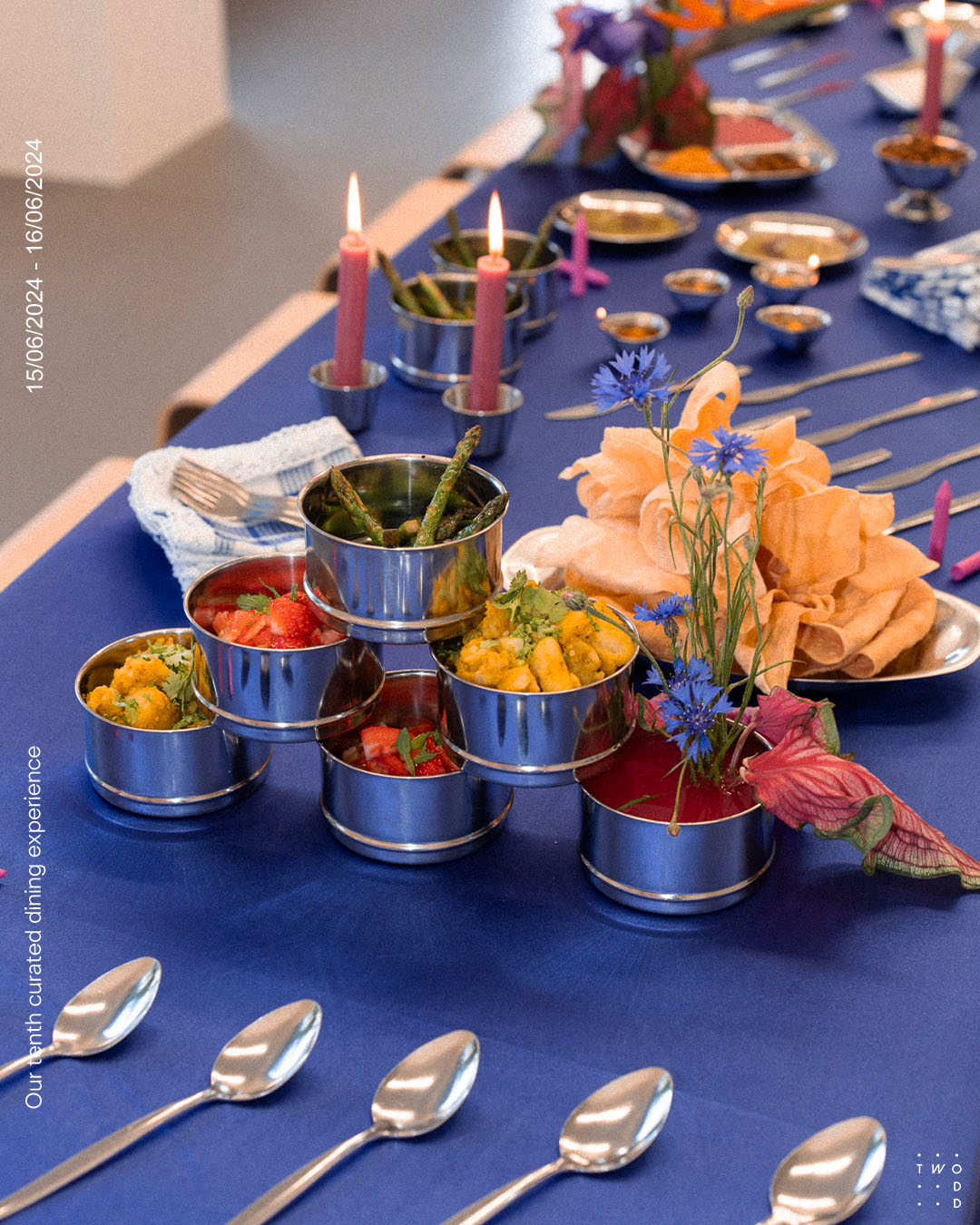
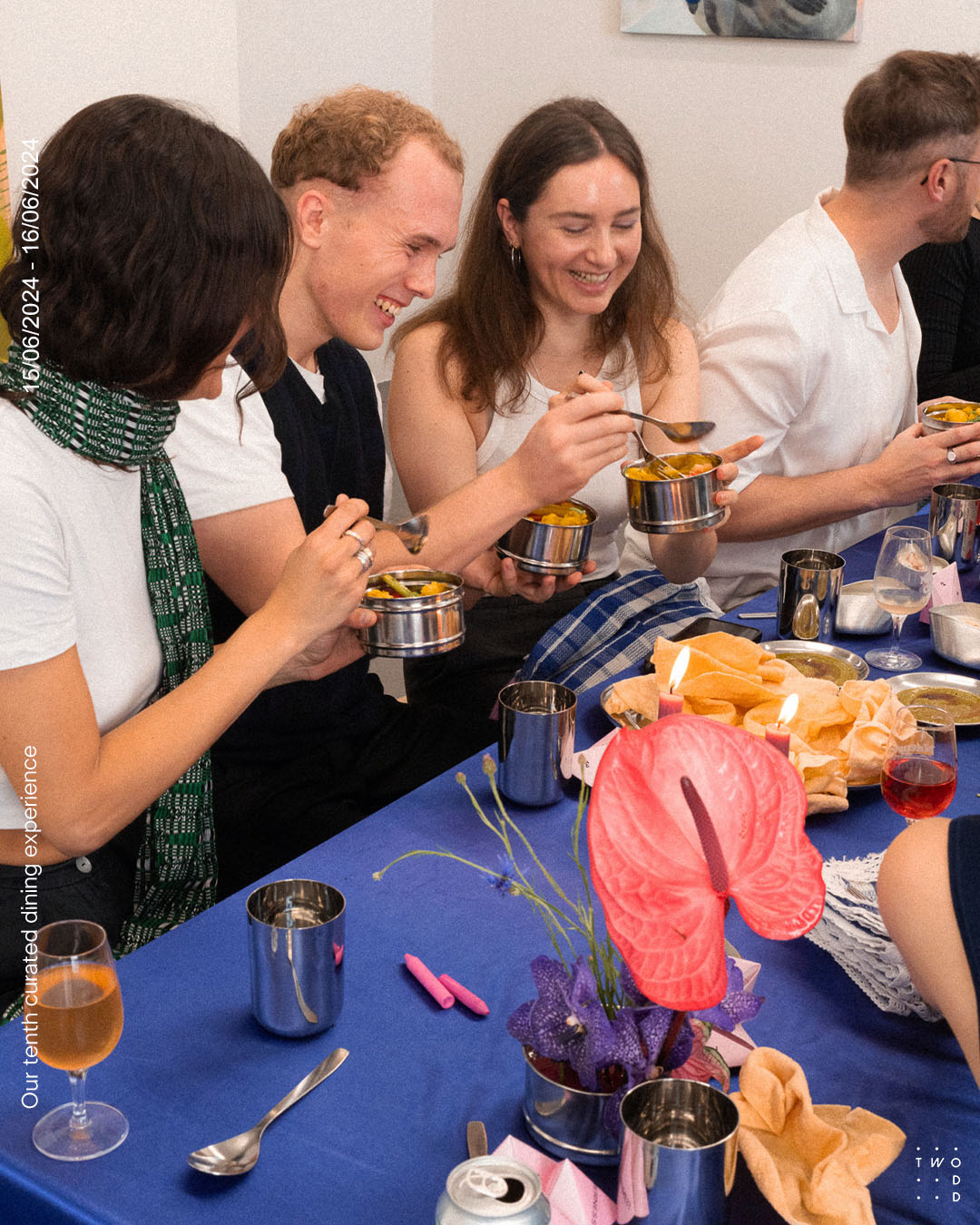
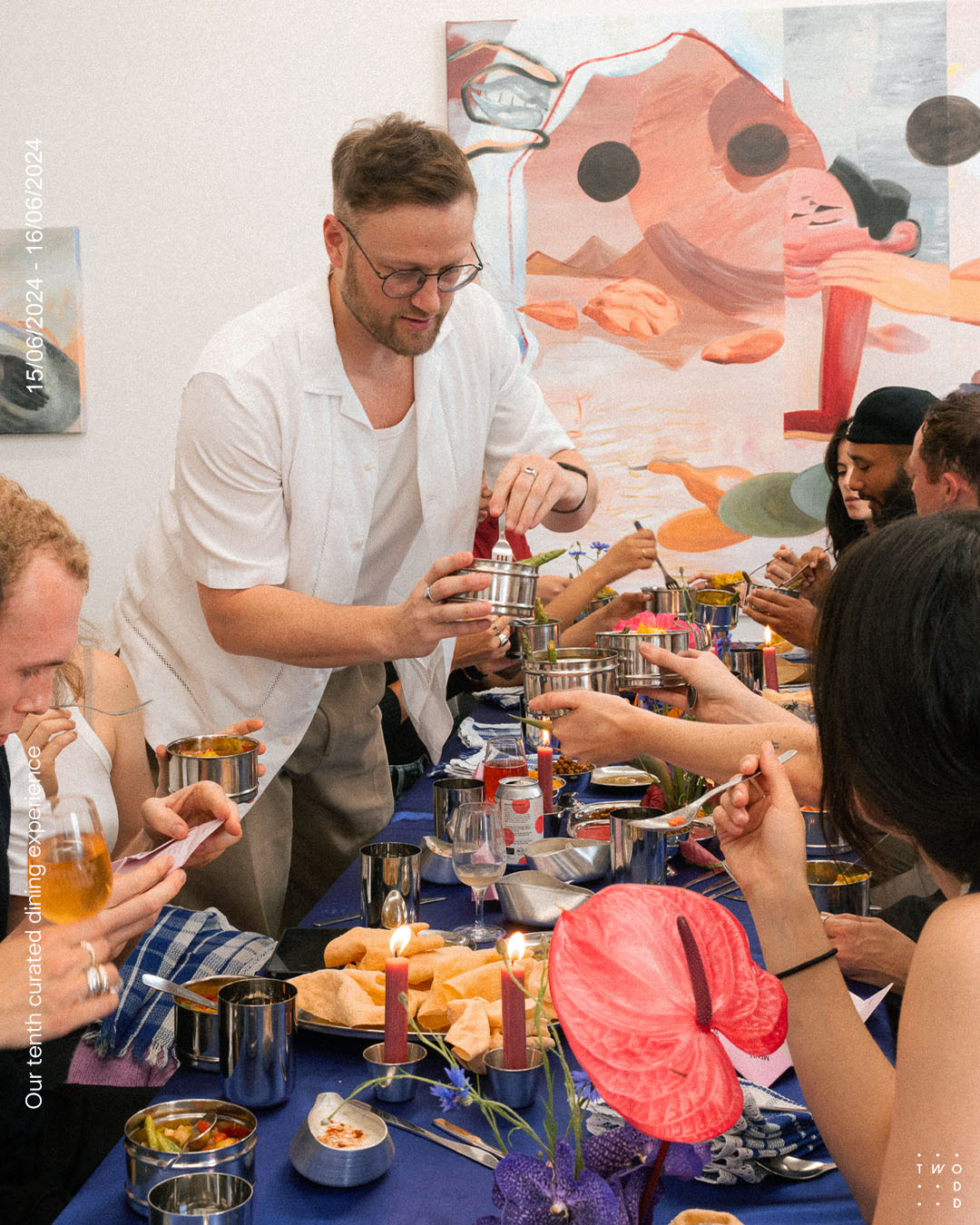
As guests sat down, they were presented with silver, stackable tiffin tins, each consisting of either chaat masala potato, cumin-seared asparagus, or tomato, strawberry, and mint salad. These three components made up the rest of the chaat course, and guests were encouraged to share their tiffin bowls to complete their meal—each contributing something new to the other’s tin. This resonated with our theme of helping one another to create the final result. Pairing these with the elements that were already on the table, the chaat course was complete.
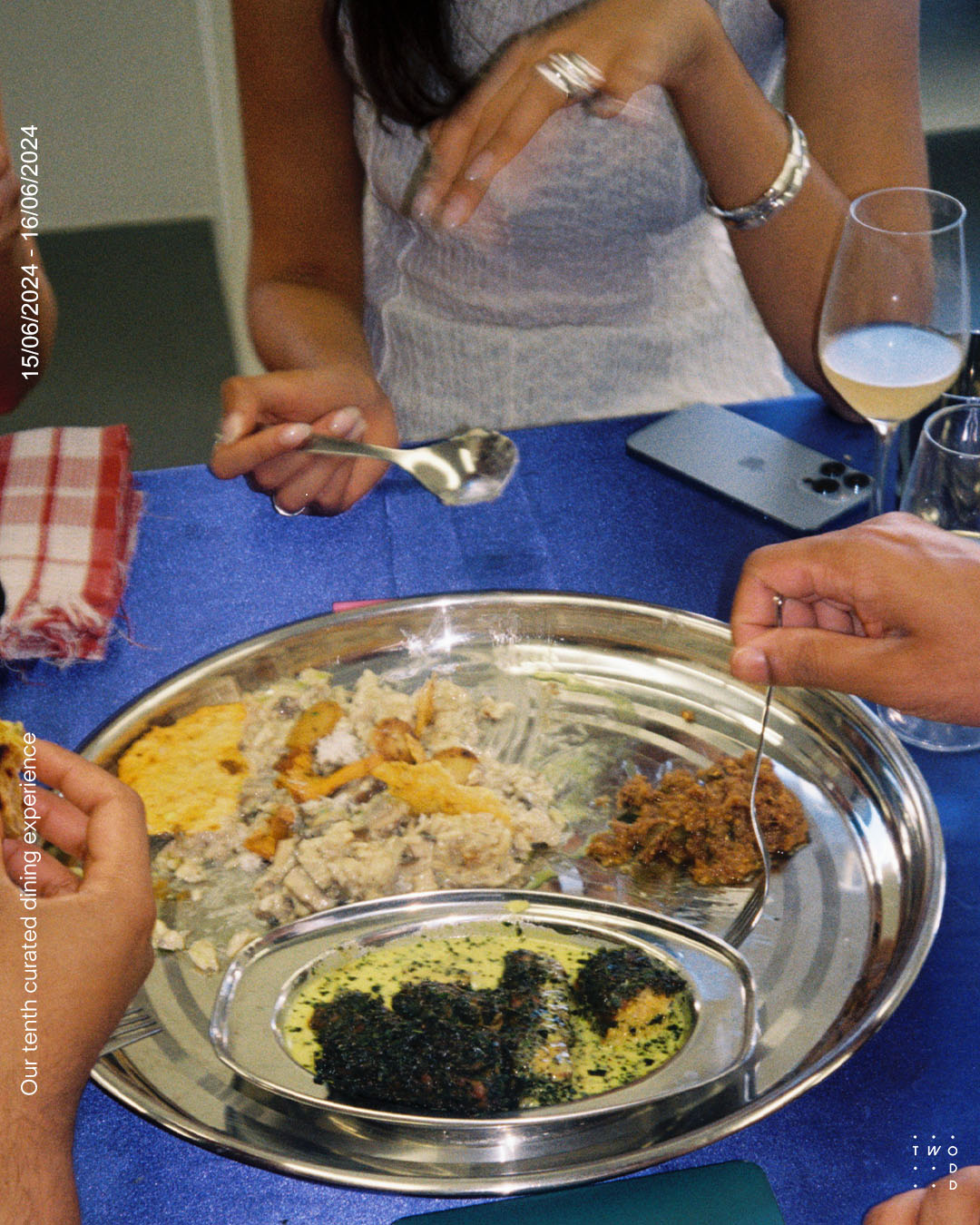
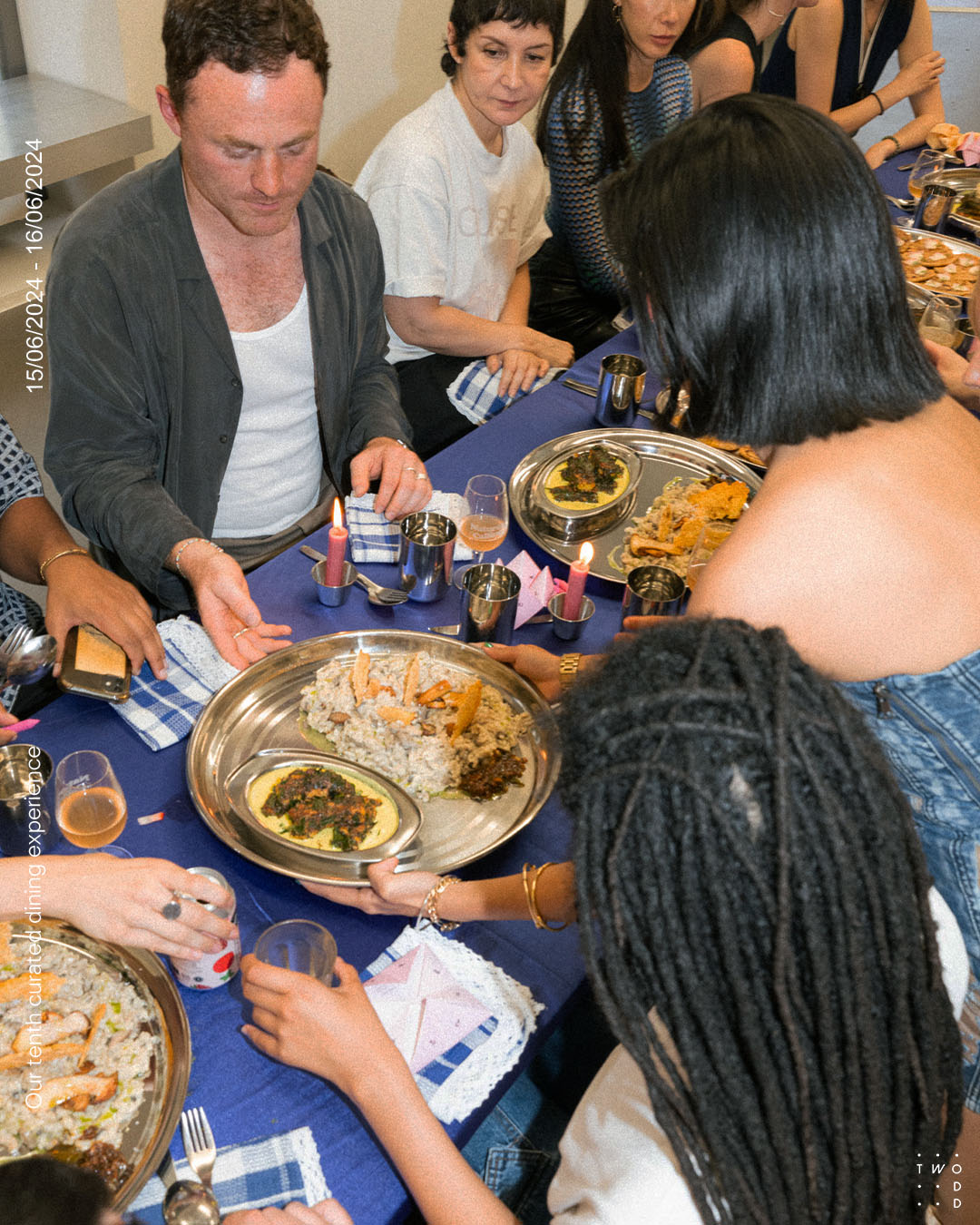
Our main course was served on a traditional South Indian thali. Each large thali served three guests, therefore they were encouraged to eat their meal together. Spooning and mixing different elements and physically being close meant that smaller intimate circles were created. The thali consisted of a mustard seed and curry leaf tempeh (the tempeh came from a family member in Germany), coconut risotto with seared seasonal mushrooms, parmesan crisp, coriander oil, and grated coconut, and aloo paratha with whipped tahini feta, radish, and dill.
Following the main course, the guests were each given a palate cleanser. Our cool watermelon and cardamom granita brought together summer’s most popular fruit and a common aromatic flavor found in and amongst most South Asian cuisine.
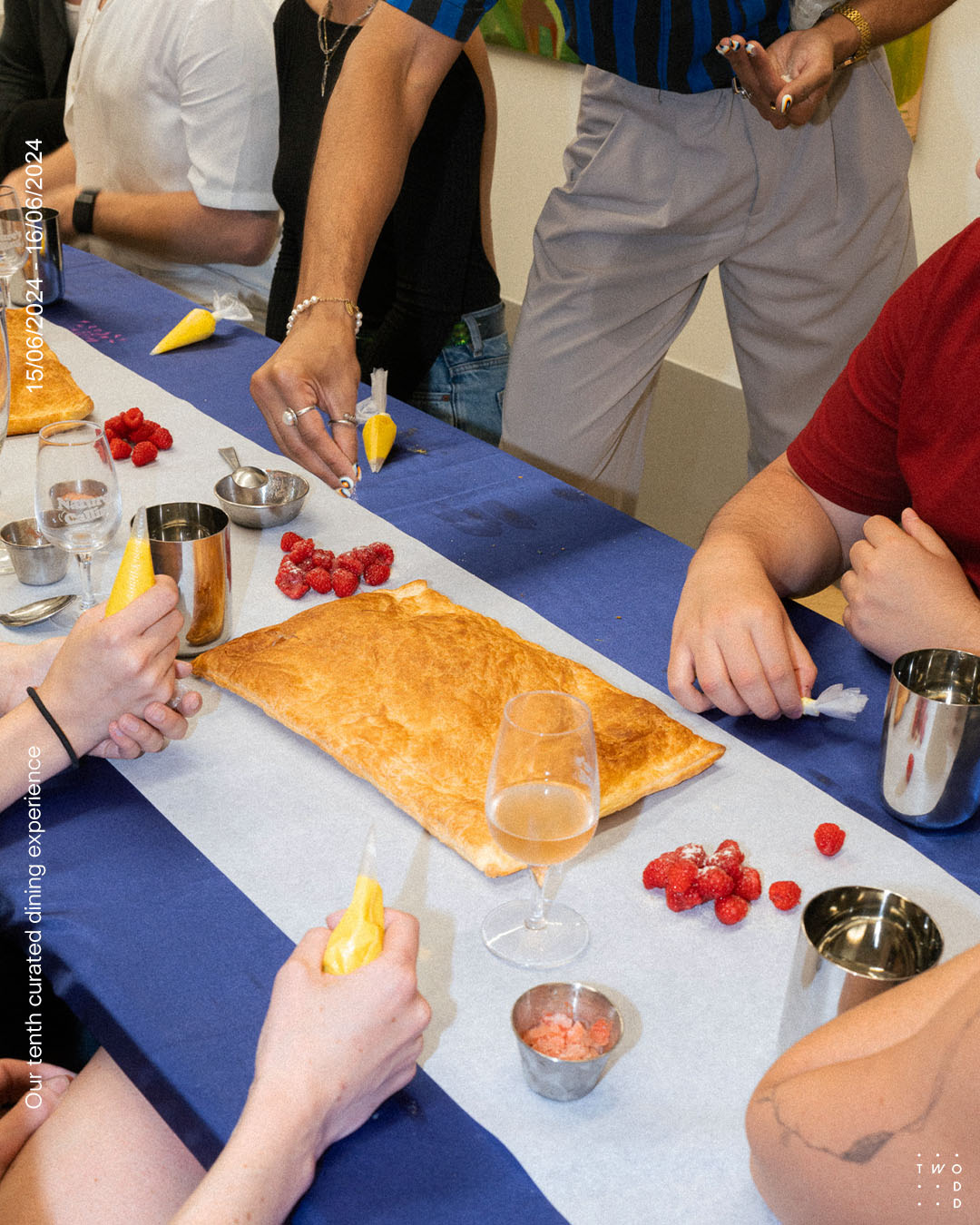
For our closing course, we decided to get interactive: guests were to construct their own dessert. The table was dressed with baking paper, with vines drawn over it. We placed cumin-sugar-dusted raspberries on the vines, followed by puff pastry shapes scattered down the center of the table. Each guest was given a little piping bag filled with turmeric crème pâtissière to accompany this course, which was a twist on a traditional mille-feuille. Rather than being stacked as you would normally see, this was broken down and given to the guests to reconstruct. The perfect way to end the meal, as each guest had their own individual way of crafting their bite, while simultaneously comparing their creations with one another.
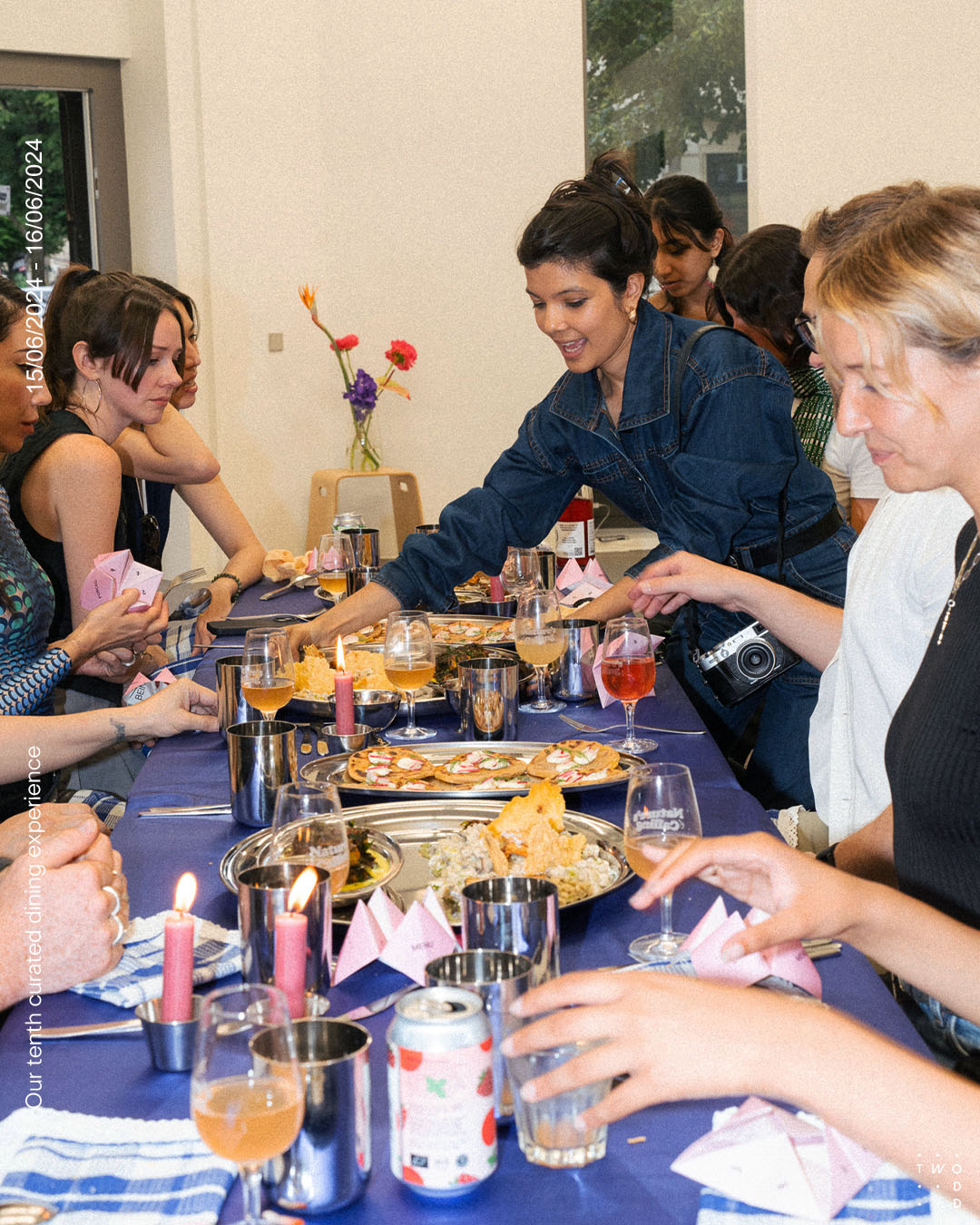
The menu was crafted to encourage communal eating, which created a unique challenge when it came to food styling. Thanks to the vibrant and colorful dishes, the meal came together in an exciting visual way that represented the mixed identities that put it together.
Decor:
The decor highlighted themes of unity, peace, and nostalgia. It aimed to bring more visibility to South Asian culture by using silverware utensils prevalent in every South Asian household, representing everyday usage. The goal was to use these everyday objects creatively, challenging the cliché and one-dimensional representation of South Asian culture in the West.
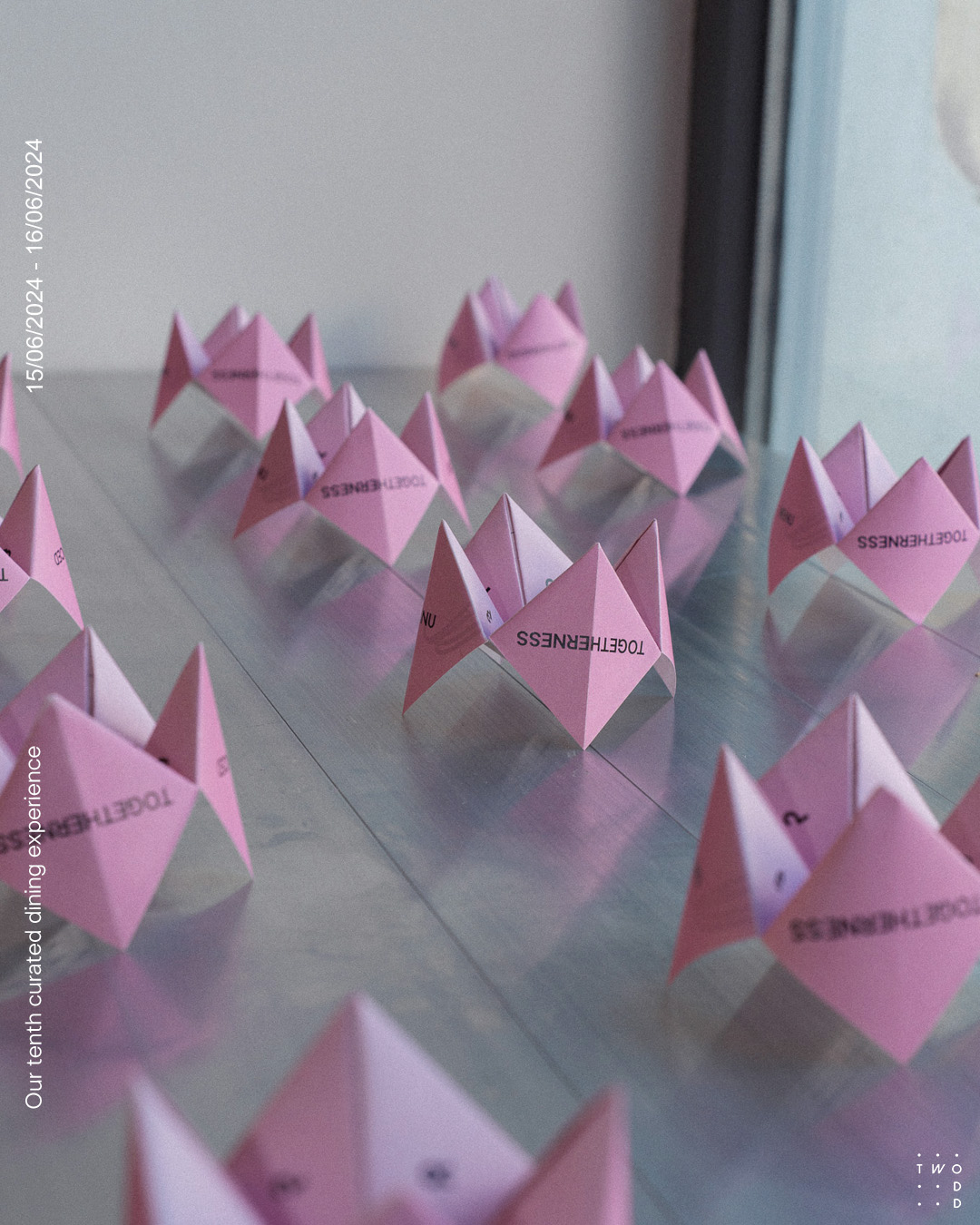
Nostalgia was evoked to highlight the purest form of relationships and togetherness, reminiscent of a time when material possessions were not a concern. The icebreaker menu, styled like a child’s doodle, struck a nostalgic chord. The individual menu that every attendee had on their seats resembled a chatterbox, aligning with the concept of revoking one's inner child. At the end of the table, a child's playpen was mimicked with playful elements like ice cream sticks, marbles, and crayons, suggesting a child had pulled the tablecloth to create their own play area. Crayons scattered across the table invited attendees to connect with their inner child and doodle on the tablecloth.
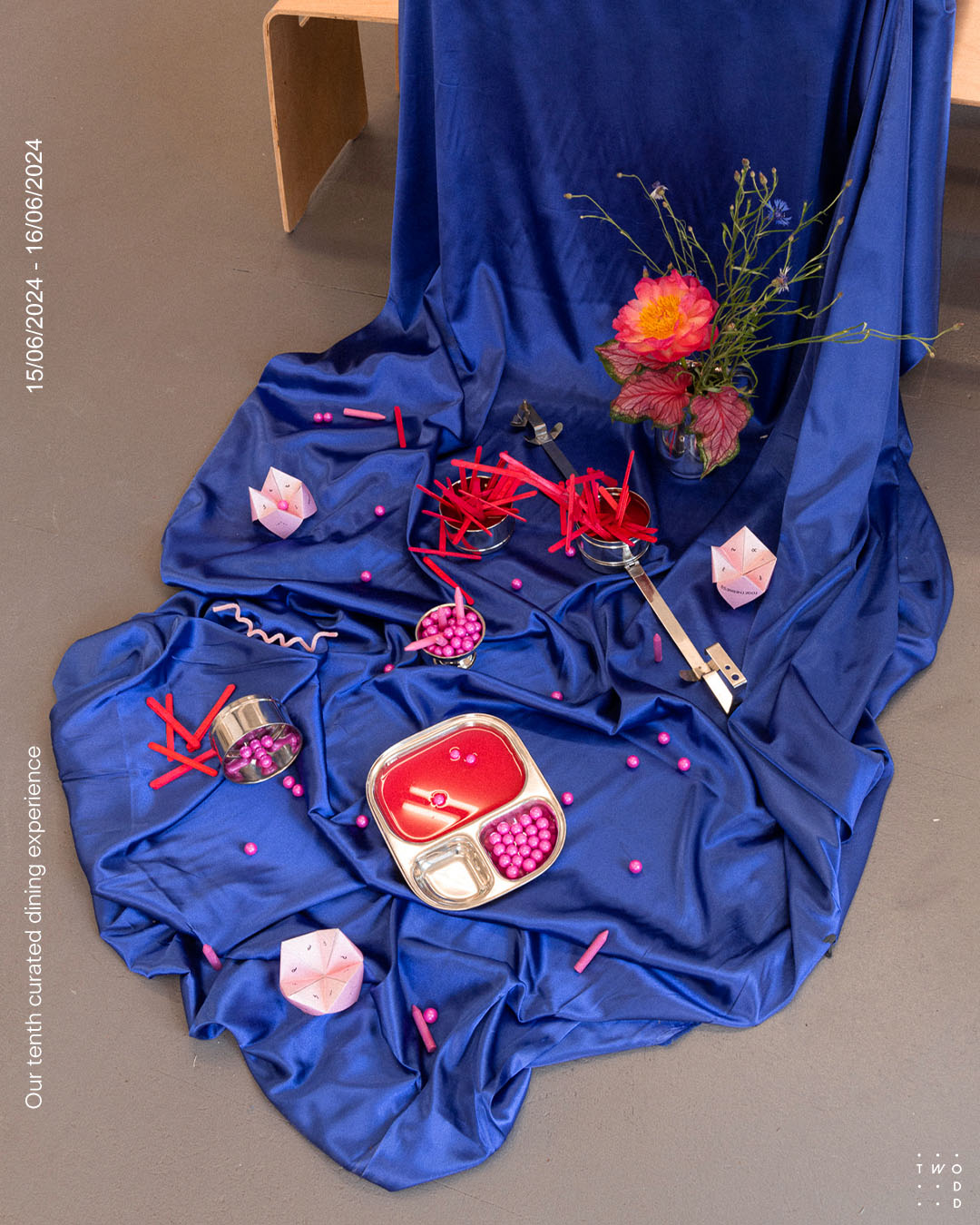
Unity was presented through the evening's colour scheme, with blue tones representing calm and togetherness, while shades of pink evoked a sense of nostalgia.
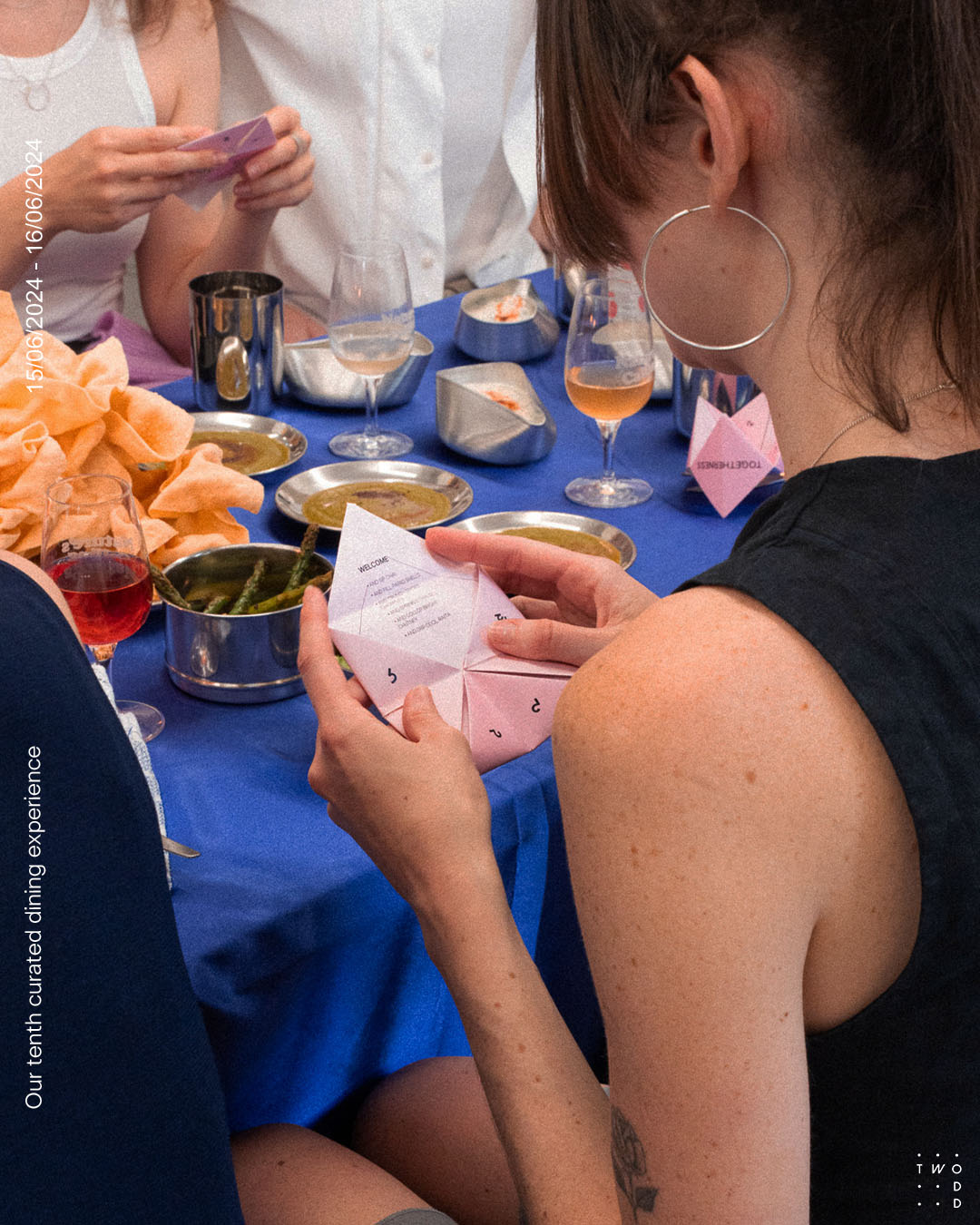
This event beautifully demonstrated the power of communal experiences in fostering genuine connections. By combining South Asian culinary traditions with creative decor and interactive activities, attendees were encouraged to break down social barriers and engage with one another. It served as a reminder that in a world increasingly dominated by technology, the value of human connection and shared cultural heritage remains irreplaceable.
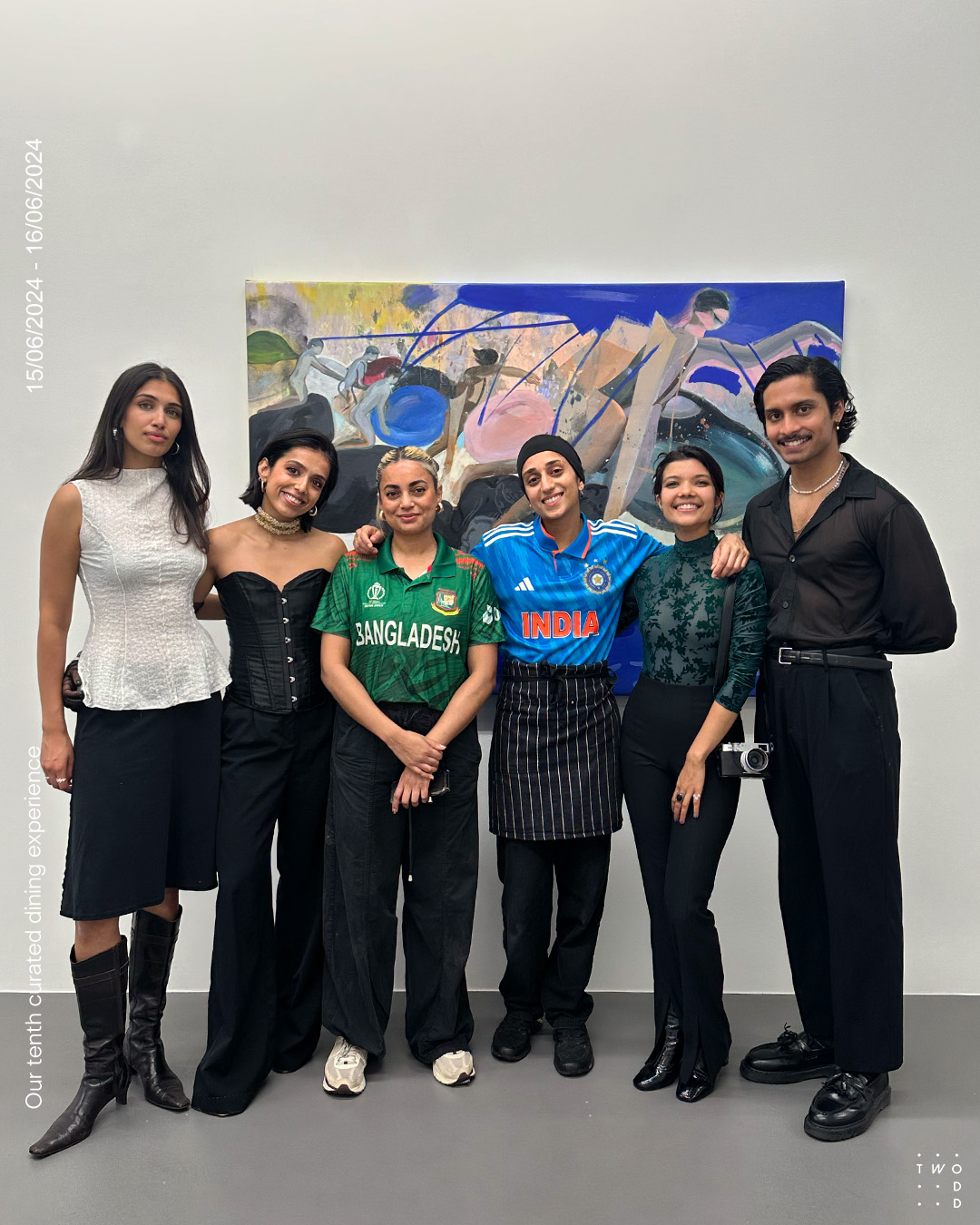
Concept, creative direction, decor execution : Two Odd, Akshita Garud
Chefs : Ruhi Parmar, Aadil Anil Kumar
Food stylist : Rezma Rahman
Experience Mediated by : Anuka Pokharel
At : Anahita Sadhighi's Contemporary Gallery
Decor Assisted by : Tuaundja and Sinead Aoife Ní Tomas
Pictures by : Yile Jin and Selina Franchesca
Graphic Design Support : Devina Modi
Drinks by : Nature's Calling and Roy Kombucha
Bar Support : Aariya Talcherkar